

As global temperatures rise and climate change drives increasing energy demand, particularly for cooling buildings, scientists have developed an innovative solution that could dramatically reduce energy consumption without sacrificing comfort or visibility. Researchers have leveraged artificial intelligence (AI) and quantum computing to design a clear window coating that passively cools buildings without using electricity (American Chemical Society, 2022a).
A Breakthrough in Passive Cooling
The newly developed transparent radiative cooler (TRC) is a clear, ultra-thin window coating that works by reflecting heat from the sun and emitting thermal radiation directly into space. This dual functionality makes it possible to keep indoor spaces cooler without the need for air conditioning or additional energy sources (American Chemical Society, 2022a).
Unlike traditional energy-intensive cooling methods, the TRC coating operates passively. It reflects the sun’s ultraviolet (UV) and near-infrared (NIR) rays, which are invisible to the human eye but contribute significantly to heating buildings. At the same time, it radiates heat in the long-wave infrared (LWIR) range through what scientists refer to as the “atmospheric window”—a specific bandwidth (8–13 μm) where the Earth’s atmosphere is particularly transparent to infrared radiation, allowing heat to escape directly into space (ScienceDaily, 2022).
The coating also preserves high levels of visible light transmission, meaning that natural daylight can pass through the window while the coating works quietly in the background to keep the building cool.
Clear Window Coating Designed with Artificial Intelligence and Quantum Computing
 The success of this coating lies in how it was developed. Led by Eungkyu Lee and Tengfei Luo, the research team used a sophisticated AI-driven optimization process combined with quantum computing to simulate and analyze thousands of possible material combinations (American Chemical Society, 2022a). By using machine learning and quantum-enhanced modeling, the team rapidly iterated through complex multilayer structures to find the most efficient arrangement for reflecting solar heat and maximizing thermal radiation.
The final design includes multiple ultra-thin layers made from silicon dioxide, silicon nitride, aluminum oxide, and titanium dioxide, applied on a glass substrate and topped with a protective layer of polydimethylsiloxane (PDMS) (American Chemical Society, 2022a). This combination allows the coating to balance transparency with high reflectivity in the solar spectrum and strong emissivity in the thermal spectrum.
The researchers noted that this AI-guided approach not only accelerated the material discovery process but also optimized the coating far beyond what traditional design methods could achieve.
Performance That Outpaces Conventional Solutions
When fabricated and tested, the AI-designed TRC significantly outperformed both conventionally designed radiative coolers and some of the best commercial heat-reduction window glass currently on the market (American Chemical Society, 2022a). According to the researchers, buildings in hot, arid regions could reduce their cooling energy consumption by up to 31% when equipped with this new coating compared to those with standard windows (ScienceDaily, 2022).
“This window film keeps rooms bright and cool by allowing visible light to pass in while reflecting invisible infrared and ultraviolet sunlight and radiating heat into outer space,” the American Chemical Society emphasized in its announcement (American Chemical Society, 2022a).
Beyond residential and commercial buildings, the coating could also be applied to vehicle windows, potentially improving comfort and reducing energy use in cars and trucks, particularly in hot climates (American Chemical Society, 2022a).
A New Frontier for Material Science
Perhaps the most exciting aspect of this breakthrough is the methodology used to create it. The researchers demonstrated that combining AI, machine learning, and quantum computing can unlock material designs that were previously too complex to develop using conventional computational methods.
“The group’s quantum computing-enabled optimization technique could be used to design other types of composite materials,” the American Chemical Society reported (American Chemical Society, 2022a).
This approach could lead to accelerated discovery in other fields, including advanced coatings, energy-harvesting materials, and even electronics. It suggests that AI-driven material design could quickly become a vital tool in developing next-generation technologies that address energy and climate challenges.
Radiative Cooling in Context
Radiative cooling has been studied extensively over the last decade as a potential low-energy alternative to traditional climate control systems. Passive daytime radiative cooling (PDRC) systems, in particular, are gaining attention because they allow surfaces to stay cooler than the ambient temperature by reflecting sunlight and emitting thermal radiation through the atmospheric window.
However, many existing PDRC solutions rely on opaque, white, or reflective coatings that block visible light—a trade-off that limits their use on windows. The transparent radiative cooler described in this research represents a significant leap forward because it provides effective cooling without compromising on daylight access or window clarity.
According to industry analyses, the global market for PDRC technologies is expected to grow rapidly, reaching approximately $27 billion by 2025 as the demand for sustainable building solutions increases (Tech Times, 2022). This new TRC design aligns perfectly with this trend, offering a practical, scalable, and cost-effective passive cooling solution.
Path to Commercialization
While the laboratory results are promising, there are still several hurdles to overcome before this technology becomes widely available. Future steps include scaling up production, verifying the long-term durability of the coating under real-world environmental conditions, and conducting cost-benefit analyses to ensure commercial competitiveness with other energy-efficient window technologies, such as smart glass.
Additionally, real-world deployment across different building types and climate zones will be essential to validate the performance of the TRC at scale.
Nevertheless, the potential benefits are enormous. By reducing cooling-related energy consumption without requiring changes in occupant behavior, this technology could significantly contribute to global energy savings and carbon emission reductions.
How This AI-Designed Coating Connects to the Window Film Industry
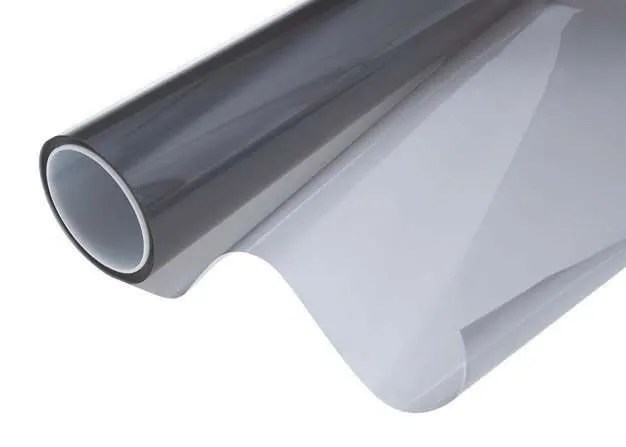
The development of the AI-designed transparent radiative cooler (TRC) has direct and exciting implications for the window film industry. While this new coating is still in the research phase, it represents a potential future evolution of energy-saving window solutions that could complement or even integrate with current film technologies.
 A Natural Extension of Window Film Benefits
Traditional window films already play a crucial role in improving energy efficiency by:
Blocking UV rays that contribute to interior fading and skin damage.
Rejecting infrared heat to reduce cooling loads.
Enhancing occupant comfort without significant loss of natural light.
The AI-designed TRC shares these benefits but adds an advanced layer of radiative cooling—the ability to emit heat into space through the atmospheric window, which is not currently a feature of most conventional window films.
Potential Future Film Applications
If researchers can develop scalable, flexible versions of this technology, it could one day be manufactured as an applied window film rather than a directly coated glass product. This would open significant possibilities for:
Retrofit installations, a massive market segment for existing homes, offices, and vehicles.
Aftermarket automotive applications, where transparent heat-rejecting films are already in high demand.
Enhanced multi-layer films, combining the benefits of UV rejection, glare control, security, and now passive radiative cooling.
For the window film industry, this innovation could represent a next-generation product offering that dramatically improves energy efficiency while maintaining the clarity and aesthetic that customers value.
Complementary Technologies
It’s important to note that this AI-designed TRC wouldn’t necessarily replace current high-performance films like ceramic or spectrally selective window films—it could enhance them. The layering principles and advanced material combinations used in TRCs could inspire hybrid window films that offer:
Enhanced solar reflectance
Passive radiative cooling
Greater infrared rejection
Improved visual clarity
As the technology matures, film manufacturers could adopt AI and quantum computing-driven design processes to optimize their own film stacks, pushing the performance of window films beyond what is currently possible.
An Opportunity for the Window Film Industry
The AI-designed transparent cooling coating demonstrates where the future of smart, energy-saving glazing technologies is headed. While still in its early stages, the potential to develop this technology into a scalable window film solution presents a unique opportunity for window film manufacturers, installers, and energy-conscious consumers alike.
By staying informed and engaged with these cutting-edge developments, the window film industry can position itself to offer even more sustainable, high-performance solutions in the years to come.
Conclusion
The AI-designed transparent radiative cooler is a groundbreaking development in sustainable building technology. By passively reflecting solar heat and radiating thermal energy into space, this innovative window coating offers an energy-free way to keep buildings cool—without compromising views or daylight.
If widely adopted, especially in hot climates, it could reduce energy use for cooling by up to 31%, leading to significant cost savings and environmental benefits. More importantly, the AI and quantum computing-driven design process could pave the way for future advancements in smart materials across industries.
As climate challenges intensify, intelligent, passive solutions like this coating could be key to creating energy-efficient buildings and vehicles that align with a more sustainable future.
References
American Chemical Society. (2022a). Clear window coating could cool buildings without using energy. Retrieved from https://www.acs.org/pressroom/newsreleases/2022/november/clear-window-coating-could-cool-buildings-without-using-energy.html
ScienceDaily. (2022, November 2). Clear window coating could cool buildings without using energy. Retrieved from https://scitechdaily.com/ai-helped-design-a-clear-window-coating-that-can-cool-buildings-without-using-energy/
Tech Times. (2022, November 2). Scientists used AI and advanced computing tech to design clear window coating that can cool buildings without energy use. Retrieved from https://www.techtimes.com/articles/282392/20221102/scientists-use-ai-advanced-computing-tech-design-clear-window-coating.htm
